Corn Planter Showdown Study - Speed
In this study Beck's compares John Deere, Fendt, and Case IH planters 24-hour emergence and singulation numbers.
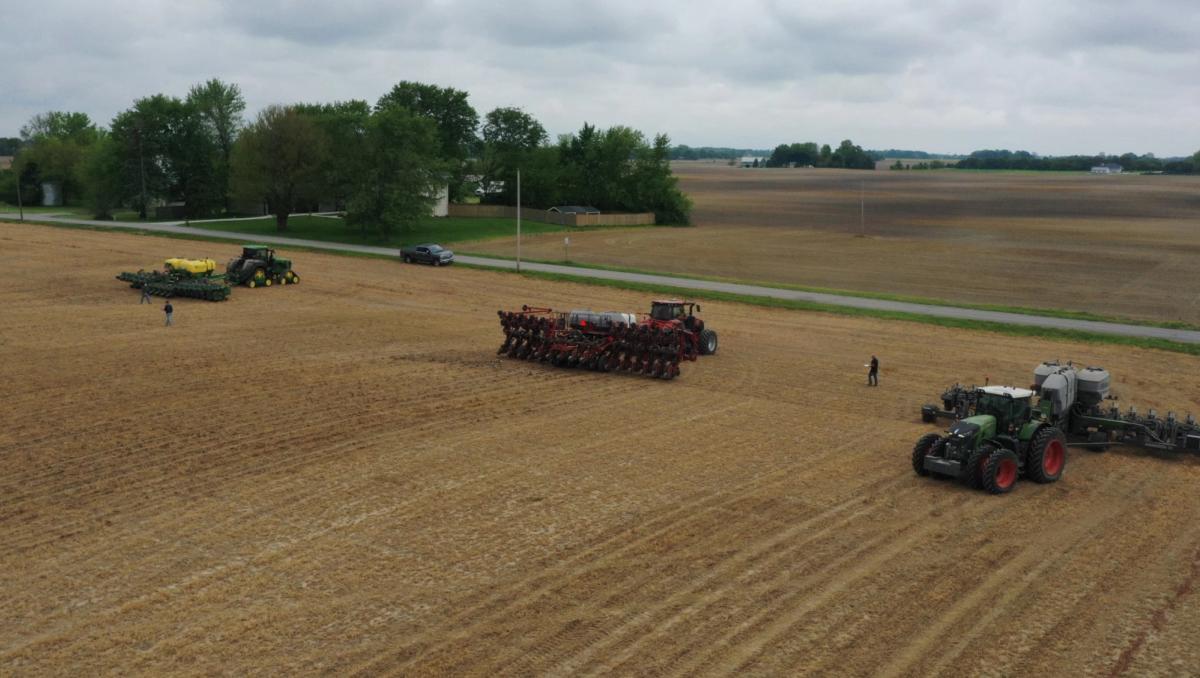
- What Beck’s set out to test
- In this study Beck's compares John Deere, Fendt, and Case IH planters 24-hour emergence and singulation numbers.
- What they found
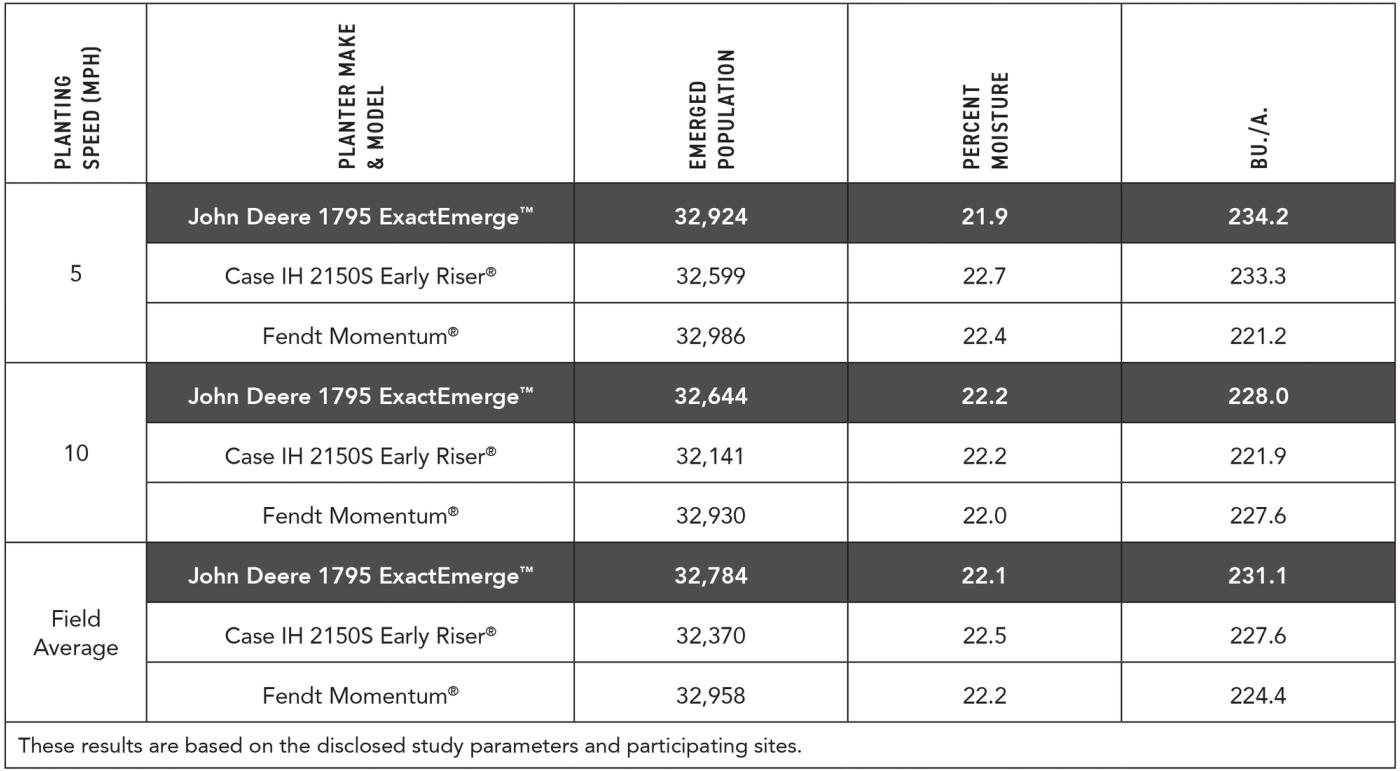
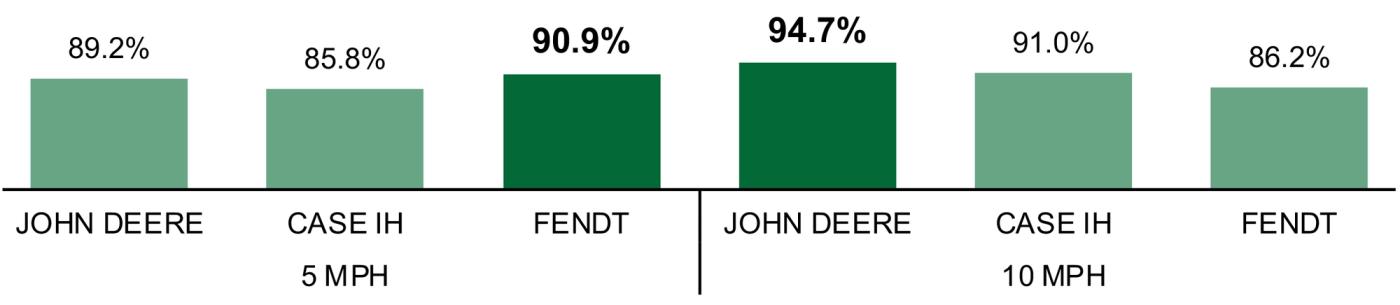
- High Speed Still Has a Cost. Even with modern high-speed technology, Beck's generally saw a yield decrease when pushing the speed from 5 mph to 10 mph. Efficiency is great, but it requires a perfectly calibrated machine to maintain yield.
- The "Champion" for Speed. In Beck's 2025 testing at the Atlanta, IN site, the John Deere 1795 ExactEmerge™ took the top spot. It demonstrated the highest yield and the most consistent performance across both speed settings.
- Fendt Performance Was Unique. Interestingly, the Fendt Momentum was the only planter in this study that saw a yield increase at 10 mph compared to 5 mph. This highlights how different row unit designs and downforce systems react to ground speed and vibration.
In the spring, every hour counts. Beck's knows you’re balancing the need to cover acres quickly with the fear of losing yield due to poor singulation or uneven depth. Beck's tested three major high-speed planter systems at 5 mph and 10 mph to see if the technology truly allows you to double your speed without leaving bushels behind in the field.
Key Observations High Speed Still Has a Cost: Even with modern high-speed technology, Beck's generally saw a yield decrease when pushing the speed from 5 mph to 10 mph. Efficiency is great, but it requires a perfectly calibrated machine to maintain yield. The "Champion" for Speed: In Beck's 2025 testing at the Atlanta, IN site, the John Deere 1795 ExactEmerge™ took the top spot. It demonstrated the highest yield and the most consistent performance across both speed settings.
Fendt Performance Was Unique: Interestingly, the Fendt Momentum was the only planter in this study that saw a yield increase at 10 mph compared to 5 mph. This highlights how different row unit designs and downforce systems react to ground speed and vibration.
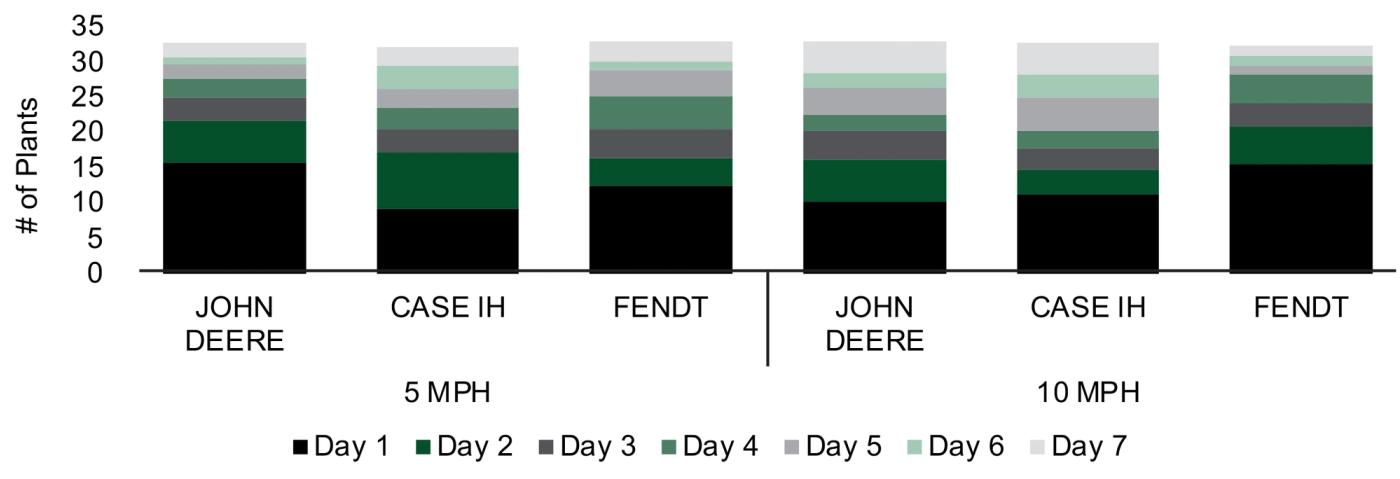
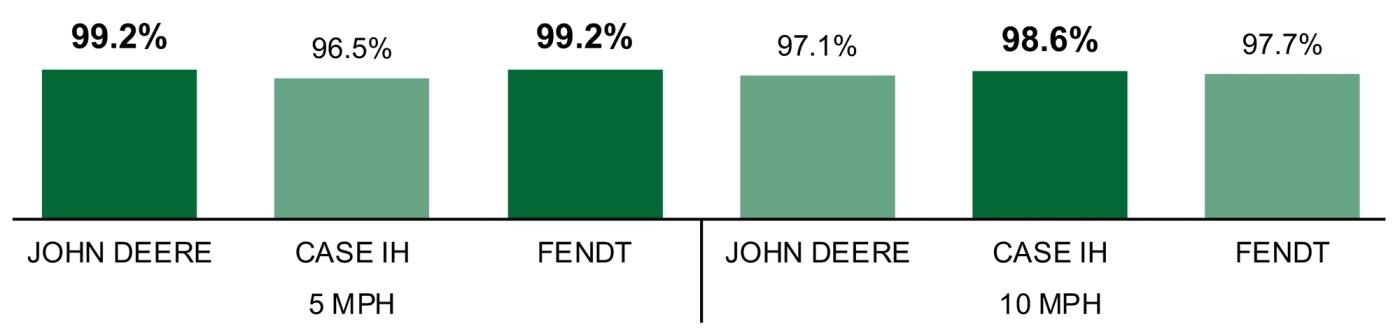
Emergence Dictates the Finish Line: Beck's observed that yield results followed 24-hour emergence and singulation numbers almost perfectly. If your planter can’t get the seed out of the tube and into the trench uniformly at high speeds, you’ll pay for it at harvest. 2025 Results - Atlanta, IN 2025 Planter Showdown (5 MPH vs. 10 MPH) - 24-Hour Emergence 2025 Planter Showdown (5 MPH vs. 10 MPH) - Singulation 2025 Planter Showdown (5 MPH vs. 10 MPH) - Acceptable
Spacing FAQs Q: Can I really plant at 10 mph and get the same yield as 5 mph? A: Beck's data suggests you should expect a slight trade-off. For example, the John Deere planter saw a 6.2 Bu./A. drop when doubling the speed. You have to weigh that yield loss against the value of getting your crop in the ground during the optimal planting window. Q: Which planter handled the high-speed vibration the best? A: In 2025, the John Deere 1795 ExactEmerge™ was the corn planting champion. Its yield results tracked the best with its singulation and emergence scores, meaning the seed delivery system stayed the most stable at 10 mph. Q: Why did the Fendt planter yield better at 10 mph than at 5 mph? A: This is a great "coffee shop" debate. It likely comes down to how that specific row unit's downforce and ride quality systems are tuned. Some systems require a certain amount of forward momentum to "settle in" and maintain consistent depth. It proves that you need to know your specific machine’s "sweet spot."
Findings and charts on this page are published by Beck’s Hybrids and are reproduced here with attribution and a link to the original. Practical Farm Research (PFR)® and PFR Proven™ are trademarks of Beck’s Superior Hybrids, Inc. John Deere and ExactEmerge™ are trademarks of Deere & Company. Beck’s conducts and owns its research independently; it was not commissioned by Koenig Equipment or by John Deere. Koenig Equipment is not affiliated with, endorsed by, or acting as an agent of Beck’s Superior Hybrids, Inc. Beck’s operates the Commitment Rewards program and handles all redemptions.